
Blog-Sustainability
April 01, 2026
Textile Waste and Sustainable Fashion
Did you know that over 115 million tons of textile waste is generated every year (Lee et. al, 2025)? Whether it is due to changing fashion trends, overconsumption, or low-quality fabrics, it seems that people hold on to clothing for short periods of time before disposal. Clothes that are disposed of in landfills or incinerators contribute to negative environmental impacts such as polluted air and water (Lee et. al, 2025). What can we do to reduce the amount of clothing that makes its way into landfills?
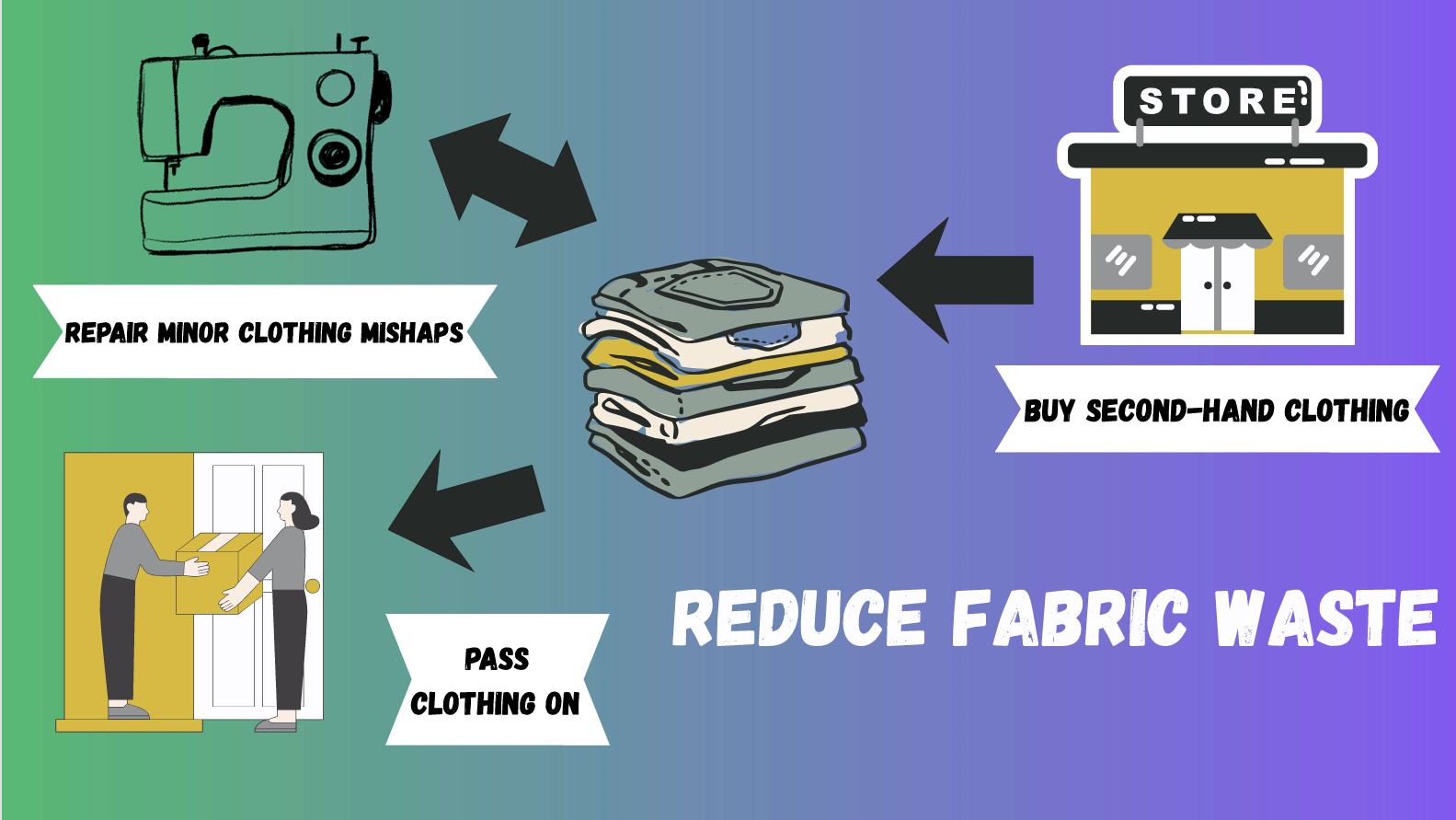
The above image is from Canva (https://www.canva.com/)
The infographic above describes three ways we can reduce our fabric waste, including buying secondhand clothing. That noted- buying secondhand clothing is a good option, but if people only add secondhand clothing purchases to their existing spending, it will not reduce fabric waste. It has been argued that that a drive to purchase second-hand clothing and/or participate in resale programs might actually drive people to purchase and consume more (Mizrachi, 2025). It makes sense- if you feel that buying secondhand clothing is more sustainable, you may not limit your purchasing, and you may feel more comfortable with purchasing non-secondhand clothing because you have already engaged in eco-friendly behaviors.
Maybe part of the challenge with reducing fast fashion is that the impact of textile disposal is not visible in our communities. Unwanted and discard clothing may be shipped to other countries and end up in landfills there (Lee et. al, 2025). Unlike natural fabrics, fabrics made with synthetic fibers such as polyester or acrylic, take much longer to degrade, as many as 100 years are needed for them to do so (Lee et. al, 2025). Synthetic dyes in discarded textiles contain heavy metals (Baloyi, et. al, 2024).
-
Heavy metals such as lead, copper, chromium, arsenic, mercury, and more can be found in the dyes and other components of discarded clothing (Baloyi, et. al, 2024).
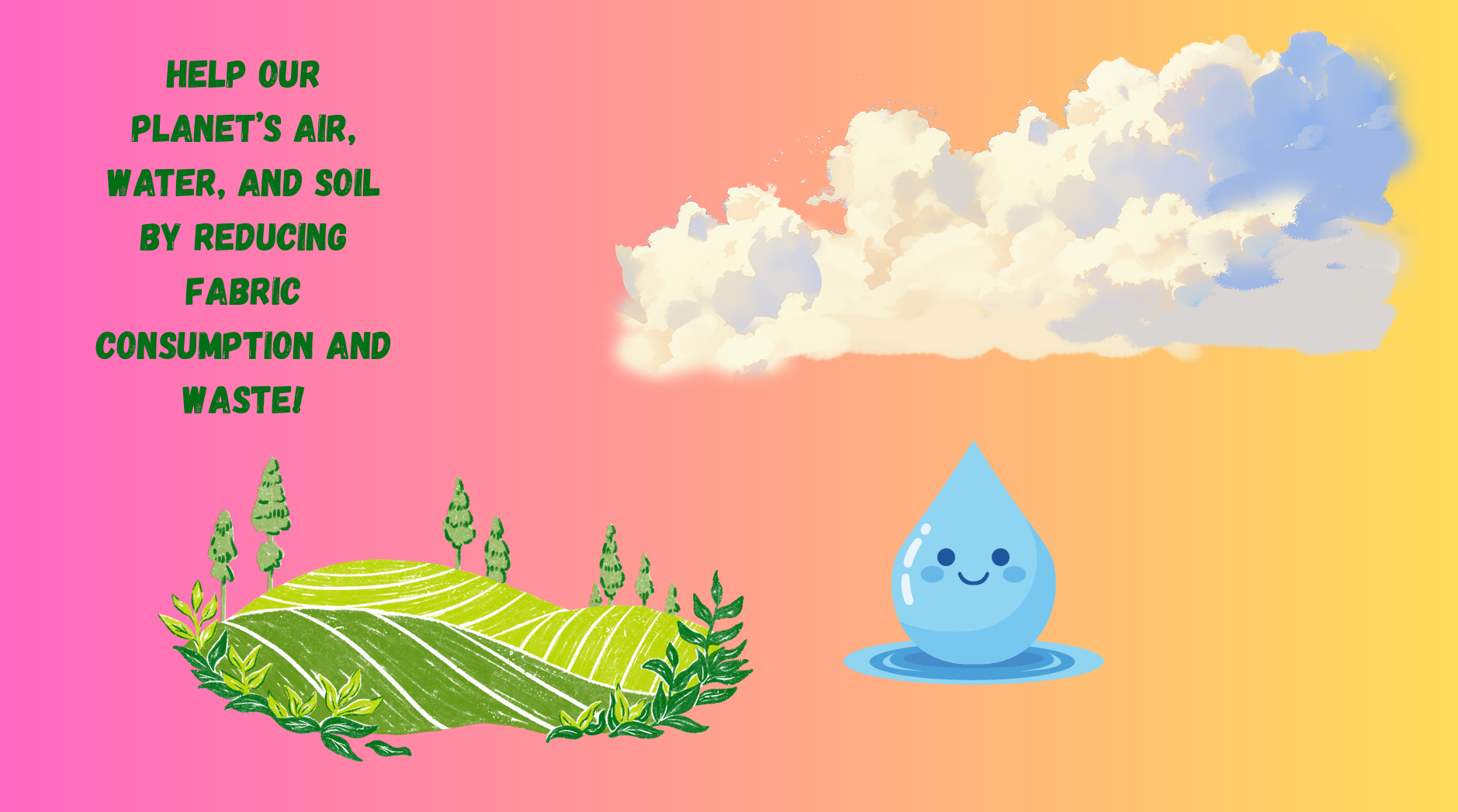
The above image is from Canva (https://www.canva.com/)
The use of synthetic fabrics in the United States began to increase in the 1940s and 1950s, used not only for items like clothing but for use on furniture (Tsoumas, 2024). Many of these synthetic fabrics are actually derived from petro-chemicals, which impacts carbon dioxide released into the atmosphere (Baloyi et. al, 2024). However, even natural fibers like cotton require a lot of water and pesticides, which has environmental impact (Baloyi et. al, 2024).
A few ways that we can reduce clothing waste would be to purchase second-hand clothing while reducing the purchase of new clothing. Sometimes clothing may be in overall good condition but have a broken zipper or a tear. Learning how to sew a button or a patch could keep that garment out of a landfill. If you don’t know how to sew (or have no inclination to do so), perhaps this is an opportunity to connect with your neighbors and your community. I had thrifted a very cool sailing jacket a couple of years ago, but the buttons were all corroded from salt water and the zipper didn’t work. It sat in my closet for a long time, until a neighbor offered to help. It is now mended and ready for several years of use!

Image above shows the sailing jacket mentioned!
References
Baloyi, R. B., Gbadeyan, O. J., Sithole, B., & Chunilall, V. (2024). Recent advances in recycling technologies for waste textile fabrics: a review. Textile Research Journal, 94(3–4), 508–
529. https://doi.org/10.1177/00405175231210239
Lee, J., Park, C. H., Yun, C., & Lee, S. (2025). Textile waste management and its sustainability: a review. Journal of Material Cycles and Waste Management, 27(4), 2183–2197.
https://doi.org/10.1007/s10163-025-02272-x
Mizrachi, M. P., & Sharon, O. (2025). Secondhand fashion consumers exhibit fast fashion behaviors despite sustainability narratives. Scientific Reports, 15(1), Article 34968.
https://doi.org/10.1038/s41598-025-19089-1
Tsoumas, J. (2024). Designing for the Land of Affluence: The Postwar American Dream through Synthetic Fabrics. International Journal of Arts Architecture & Design, 2(1), 19–30.
https://doi.org/10.62030/2024JanuaryArticle2
August 1, 2026
Plastic Bottle Use and Environmental Impact
Many of us consume plenty of plastic water bottles, soda bottles, etc. I definitely have a weakness for a Sprite at the end of a long work day! It’s easy to stop into a gas station on the way home and grab something for the drive. However, plastic bottles are not environmentally friendly, and there are many reasons for this.
Plastics themselves are a human innovation that have allowed us to do incredible things, and the first plastics actually began to be developed as early as the late 19th century for items such as billiard balls (Dennis, 2024). The capacity to withstand erosion, to hold up against water and soil and time, is one of the reasons plastics became so valuable. It is unfortunately this longevity that results in plastic waste that lingers in the environment, including in our water (Sajedi & An, 2026).
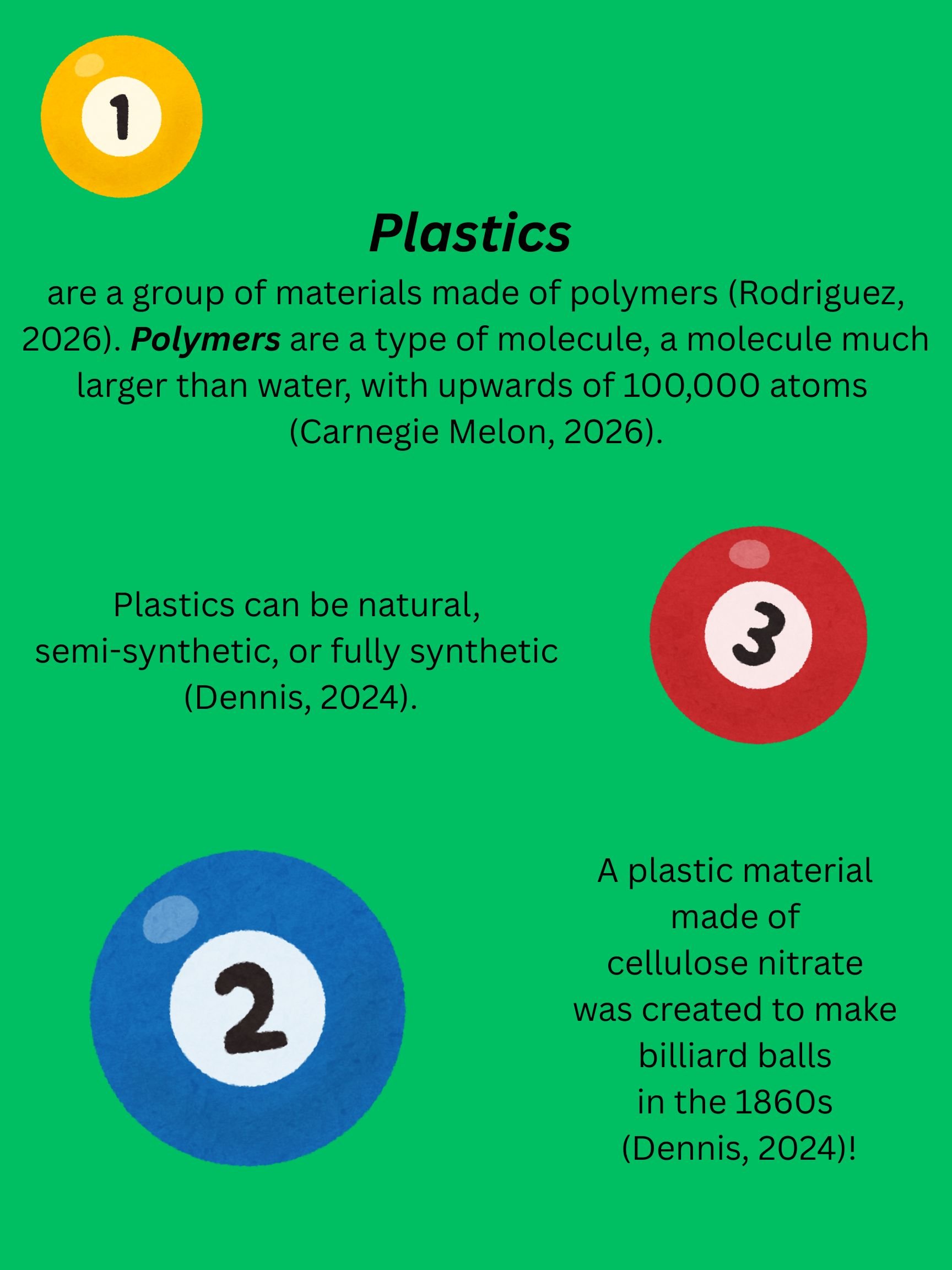
Above image created on Canva. (https://canva.com/)
In addition to being waste in the environment, the production of plastic bottles also results in carbon dioxide being emitted into the atmosphere (Tamburini et. al, 2021). All of the potential repercussions of plastic bottle use made me want to see my own impact on the environment. I decided to see how my daily and weekly use of plastic water bottles was impacting the environment. For 20 days I recorded how many plastic bottles I used- from water bottles to soda bottles to Gatorade bottles. What I found was that my usage over a year would generate 136 pounds of carbon emissions!

Above image created on Canva. (https://canva.com/)
What could I do?
I made some changes, the first being more careful to have my reusable water bottle with me, filled up and ready to go on my commute. There is some environmental cost with using reusable bottles, primarily with the production of the bottle itself and the washing of the bottle (Tamburini et. al, 2021, Summa et. al, 2026). A reusable water bottle can be used for many years, so the production eco-cost reduces over time. Since the use of disposable plastic bottles also generates waste that ends up in the environment, I felt that using a reusable water bottle overall was a beneficial trade-off.
I also tried to time my daily schedule to put gas in my car early in the day, before it got hot out and I would be more tempted to pick up a beverage at the gas station. Reducing my commute would be the largest factor in reducing bottle use, but is unavoidable at this time, like it is for many of us who don’t live in walkable areas or have work close by.
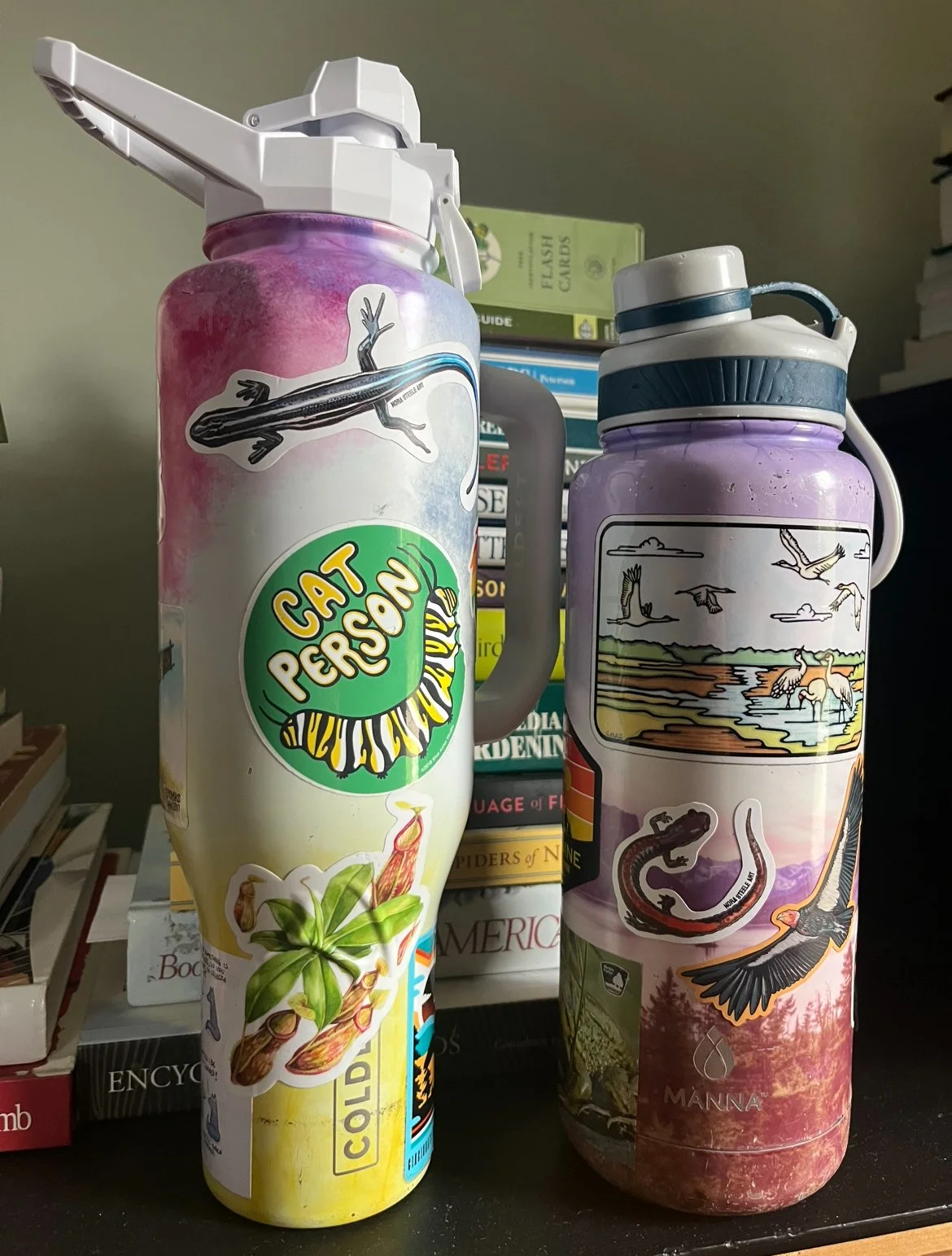
My favorite two reusable bottles- I’ve had the purple one since 2017!
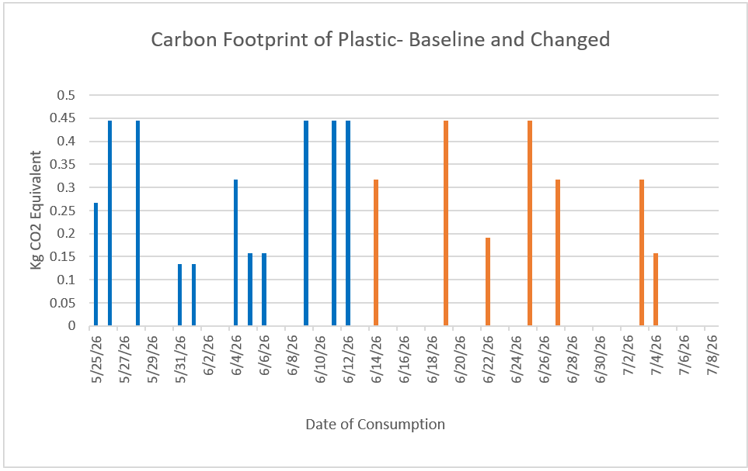
For twenty-five days I put these strategies in place to reduce my purchase and consumption of plastic bottles, and this is what I found:
My usage dropped to an average of 0.194 pounds of carbon emissions a day, over a year, that is 70 pounds of carbon emissions. I reduced my environmental impact by nearly half!
As you can see in the chart below, I still had some use of plastic bottles in the period where I employed reduction strategies. I was still able to create positive change in my environmental impact. There doesn’t need to be an “all or nothing” perspective when it comes to eco-friendly changes. Every little bit counts and is something to be proud of!
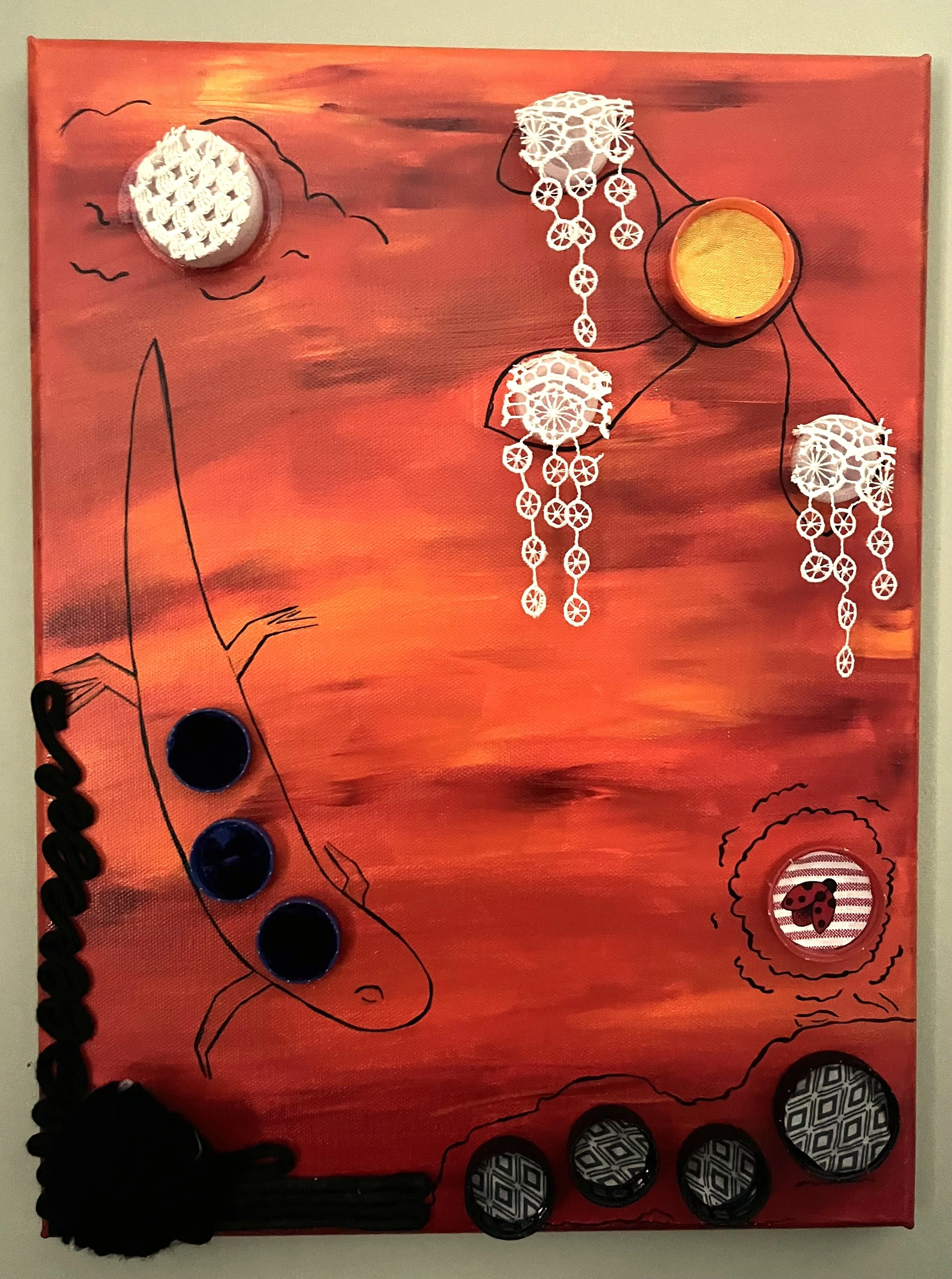
As you can see from the rest of my website, I’m an artist and love to see how I can be work with a variety of materials. In the spirit of reuse and creativity, I kept the bottle caps from the plastic bottles collected over the recording process and incorporated them into an art project.
The acrylic painting is adorned with bottle caps and fabric scraps. It was inspired by a salamander spotted in a parking lot (which got itself to safe green grass shortly after the below picture was taken).
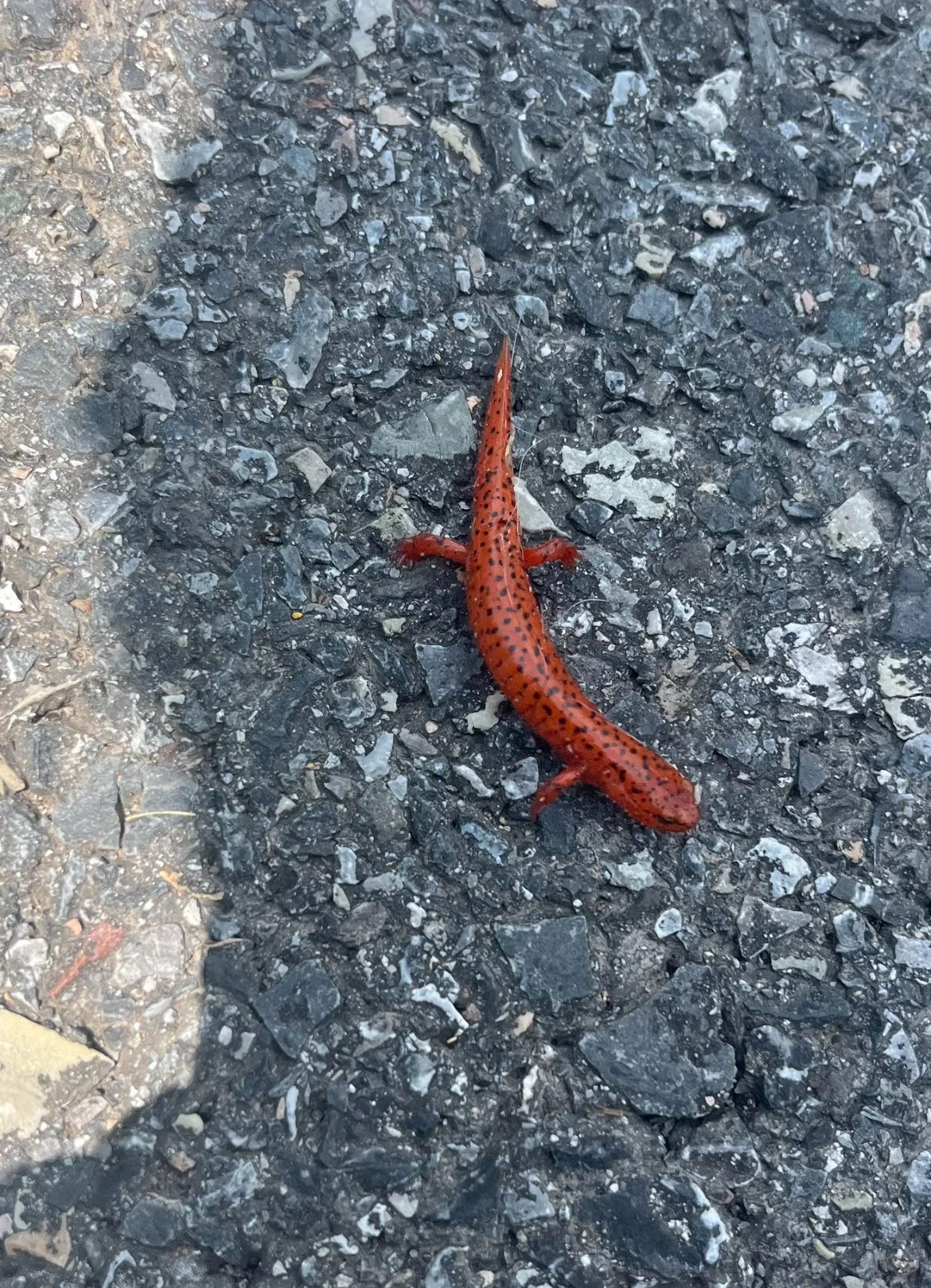
The model- I believe this is a northern red salamander
References
Carnegie Melon (2026). Introduction to Polymers- Leonard Gelfand Center. https://www.cmu.edu/gelfand/k12-educational-resources/polymers/what-is-polymer/index.html
Dennis, L. (2024). A brief history of the use of plastics. Cambridge Prisms: Plastics, 2, Article e19. https://doi.org/10.1017/plc.2024.17
Rodriguez, F. ed. (July 12, 2026). Plastic. Brittanica. https://brittanica.com/science/plastic
Sajedi, S., & An, C. (2026). The plastic pulse: How global water consumption behaviors shape exposure to nano- and microplastics from single-use plastic water bottles. Journal of Cleaner Production, 563, Article 148459. https://doi.org/10.1016/j.jclepro.2026.148459
Summa, D., Costa, S., Tamisari, E., Castaldelli, G., Tamburini, E. (2026). How sustainable and safe is drinking from refill-and-reuse bottles? An analysis of based on the life-cycle assessment (LCA) and microbiological quality of water. Environmental Research. https://doi.org/10.1016/j.envres.2025.123212
Tamburini, E., Costa, S., Summa, D., Battistella, L., Fano, E. A., & Castaldelli, G. (2021). Plastic (PET) vs bioplastic (PLA) or refillable aluminium bottles – What is the most sustainable choice for drinking water? A life-cycle (LCA) analysis. Environmental Research, 196, Article 110974. https://doi.org/10.1016/j.envres.2021.110974